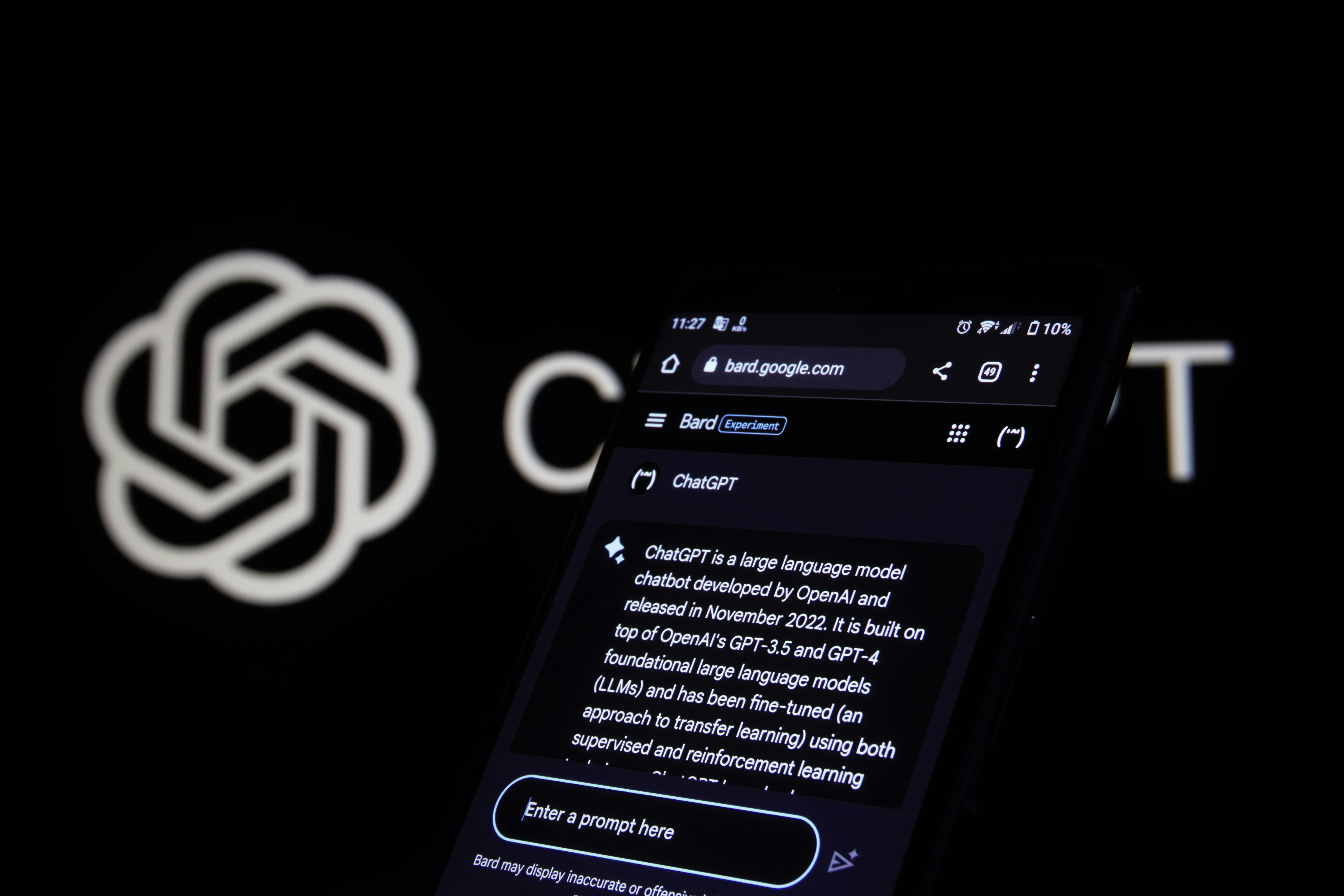
What is ChatGPT?
ChatGPT is an advanced conversational AI model developed by OpenAI, powered by the GPT (Generative Pre-trained Transformer) architecture. This state-of-the-art technology uses deep learning techniques to understand and generate human-like text based on the input it receives. Originating from sophisticated research in natural language processing (NLP), ChatGPT has been fine-tuned to facilitate engaging and coherent conversations across a variety of contexts.
The core of ChatGPT’s capabilities stems from its extensive training on a diverse dataset, encompassing internet texts and other forms of written communication. This allows the model to not only respond to queries but also to engage in discussions, generate creative content, and assist with several tasks such as summarization, translation, and more. Unlike traditional AI systems, which often rely on rule-based interactions, ChatGPT adapts through learning patterns in language usage, providing a more fluid and human-like conversational experience.
Mastering ChatGPT: Can You Score 100%?
Test your understanding of how ChatGPT works and its real-world applications with this quick comprehension challenge!
See your result instantly after answering.
One of the distinguishing features of ChatGPT is its versatility. It differs from other AI models in its ability to maintain context over longer conversations, enabling it to generate responses that are relevant to preceding dialogue. This attribute makes it a favored choice for applications in customer support, content creation, and educational tools, among others. The customizability of ChatGPT also allows developers to tailor interactions based on specific needs, enhancing its utility across various industries.
In summary, ChatGPT represents a significant advancement in AI communication technologies. Its combination of deep learning, context awareness, and adaptability marks a notable shift in the capabilities of AI-driven conversational agents, making it an essential tool for both beginners and experts seeking to leverage AI for productive interactions.
How Does ChatGPT Work?
At its core, ChatGPT operates using a sophisticated framework that combines natural language processing (NLP) and machine learning algorithms to understand and generate text in a human-like manner. Natural language processing is a field of artificial intelligence aimed at enabling machines to interpret, generate, and respond to human language in a way that is both meaningful and contextually appropriate.
To begin with, ChatGPT is built on a model known as the Generative Pre-trained Transformer (GPT). This model is pre-trained on vast amounts of text data, which allows it to learn grammatical structures, facts, and various writing styles. During the training phase, the model processes countless sequences of words and phrases, adjusting its internal parameters to improve predictions about the next word in a sentence based on the context provided by preceding words. This process relies heavily on machine learning techniques, specifically deep learning, to refine the neural network used in the model.
Once the pre-training is complete, the model undergoes fine-tuning, which is a more focused training process utilizing a narrower dataset with specific tasks in mind. Fine-tuning enables ChatGPT to enhance its performance by improving its understanding of various prompts and user intents. Additionally, it ensures that the model can adhere to conversational norms and generate responses that feel more relatable to users.
The underlying algorithms are critical as they determine how well ChatGPT can carry out complex tasks such as generating coherent dialogue, summarizing texts, and answering questions. The attention mechanism, a key component of the Transformer architecture, allows the model to weigh the importance of different words and their relationships in generating appropriate responses. Together, these methodologies illustrate how ChatGPT is able to simulate human-like conversation, making it a powerful tool in various applications.
Practical Applications of ChatGPT
ChatGPT has emerged as a versatile tool applicable across various industries, enhancing efficiency and user experience. In the realm of customer service, businesses leverage this artificial intelligence to provide instant support and resolve queries. For instance, companies such as retail and e-commerce utilize ChatGPT to handle frequently asked questions, assist customers in navigating through products, and even manage order confirmations, enabling human agents to focus on more complex issues.
In the arena of content creation, ChatGPT serves as a valuable asset for writers, marketers, and content strategists. It can generate engaging articles, social media posts, and marketing copy, thereby streamlining the content development process. For instance, a digital marketing agency might rely on ChatGPT to quickly draft ad campaigns or blogs, thereby enhancing productivity and creativity within the team. Its ability to produce various writing styles makes it an indispensable collaborator.
Beyond business, education also benefits from the capabilities of ChatGPT. Educators can utilize this tool to create interactive learning materials, generate quizzes, or even assist students in understanding complex subjects. In academic settings, ChatGPT could potentially offer tutoring support, answering student inquiries in real-time, thus promoting personalized learning experiences.
Moreover, creative professionals including authors and musicians have also found innovative use cases for ChatGPT. Writers can brainstorm ideas or overcome writer’s block by utilizing its vast knowledge base, while musicians might use it to generate lyrics or compose melodies inspired by various genres.
In summary, ChatGPT’s application spans multiple sectors, illustrating its versatility. By integrating ChatGPT into their workflows, businesses and individuals alike can enhance productivity, creativity, and customer satisfaction, showcasing the profound impact that this technology can have across various domains.
Benefits of Using ChatGPT
ChatGPT offers numerous advantages that make it a compelling choice for users across various domains. One of its primary benefits is efficiency. The model is designed to generate responses rapidly, enabling users to receive information quickly. This aspect is particularly beneficial in business settings, where timely communication is crucial. As organizations increasingly rely on automated systems for client interactions, ChatGPT can significantly reduce response times and enhance overall productivity.
Cost-effectiveness is another notable advantage of employing ChatGPT. Traditional customer service methods often incur substantial costs, especially when relying on a large workforce to handle inquiries and support requests. ChatGPT, on the other hand, minimizes these operational costs by providing a scalable solution that can manage multiple queries simultaneously without the need for proportional increases in workforce size. This capability can lead to significant savings over time while maintaining high levels of service quality.
Furthermore, ChatGPT’s versatility in handling diverse user queries is a key strength. The model is trained on a vast array of topics, which enables it to provide relevant and context-aware responses. Whether the inquiry is related to technical support, general knowledge, or creative brainstorming, ChatGPT adapts its output to suit various contexts, ensuring that users receive accurate and helpful information. This adaptability positions ChatGPT as an invaluable tool for many individuals and organizations seeking effective communication solutions.
Limitations and Challenges of ChatGPT
Despite its many advantages, ChatGPT is not without its limitations and challenges. One of the primary drawbacks is its occasional inaccuracies in generating information. While the model is trained on a vast array of data, it may still provide responses that are factually incorrect or outdated. This challenge emphasizes the importance of users cross-referencing information obtained from ChatGPT, particularly in scenarios where accuracy is critical.
Another limitation relates to the understanding of nuances in human communication. ChatGPT often struggles with context-dependent interpretations, humor, sarcasm, and subtlety. These complexities can lead to misunderstandings or responses that do not align with the user’s intended meaning. It is crucial for users to provide clear input to minimize potential confusion and enhance the interaction quality.
Ethical considerations also pose significant challenges in the use of ChatGPT. For instance, there are concerns surrounding bias in its responses, stemming from the training data. This raises questions about fairness and the potential for reinforcing stereotypes or misinformation. Developers and users must be aware of these ethical challenges and strive to mitigate the risks associated with them.
Moreover, there are scenarios where ChatGPT may not be the most suitable solution. For tasks requiring high emotional intelligence or deep critical thinking, human intervention remains irreplaceable. Situations such as mental health discussions or nuanced negotiations are best handled by trained professionals rather than AI. Thus, while ChatGPT is a powerful tool, it is essential to understand its limitations and apply it judiciously within its capabilities.
ChatGPT for Beginners: Getting Started
ChatGPT is an advanced language model developed by OpenAI, designed to understand and generate human-like text based on the prompts it receives. For those new to this technology, getting started with ChatGPT can seem daunting; however, the process is quite user-friendly and accessible across various platforms.
To begin your journey with ChatGPT, you can access it through multiple platforms. The most common method is via the official OpenAI website, where users can interact with the model directly. Additionally, some third-party applications and tools have integrated ChatGPT, allowing for streamlined access. These often include chatbots, writing aids, or programming assistants, enabling users to harness ChatGPT’s capabilities in various contexts.
When formulating prompts to interact effectively with ChatGPT, clarity and specificity are crucial. Start with a clear question or statement, as this provides the model with direction. For example, rather than simply stating “Explain photosynthesis,” you might ask, “Can you explain the process of photosynthesis in simple terms?” This approach ensures that the responses are relevant and tailored to your needs.
Moreover, engaging with ChatGPT requires a degree of experimentation. Play around with different types of prompts—open-ended questions, detailed instructions, or even creative scenarios. This experimentation will enhance your understanding of how to elicit the most informative and helpful responses from ChatGPT.
To summarize, utilizing ChatGPT effectively involves understanding where to access the platform, crafting clear and specific prompts, and engaging in trial and error to refine your interactions. With these foundational steps, beginners can confidently embark on their exploration of this powerful tool.
Advanced Tips for Experienced Users
For users already familiar with ChatGPT, exploring advanced techniques can significantly enhance the interaction quality and outcomes. One of the foremost strategies is the fine-tuning of prompts. By carefully designing your prompts, you can guide the model to generate responses that better meet your needs. This involves being specific about the information you want and the context surrounding it. For instance, instead of asking, “Tell me about climate change,” a more effective prompt might be, “Explain the impacts of climate change on coastal cities, focusing on economic and environmental aspects.” This specificity helps ChatGPT generate more relevant and detailed responses.
In addition to refining your prompts, it is beneficial to incorporate context into your interactions. If your questions relate to a previous conversation or specific topics, providing that context can improve response accuracy. ChatGPT has the capability to remember prior interactions within a session. Make full use of this feature by reiterating relevant details or asking follow-up questions that build upon previous answers.
Furthermore, leveraging API integrations can unlock an array of functionalities, making the experience more dynamic. Users can connect ChatGPT to various applications for tasks like automated customer service, content generation, or data analysis. Utilizing API calls lets you customize responses based on user inputs, gaining real-time adaptability and enhancing the overall performance of ChatGPT.
For a truly advanced experience, consider experimenting with different model settings available through the API. Adjusting parameters such as temperature can control randomness in responses, while max tokens dictate the length of the output. By manipulating these settings, seasoned users can tailor responses to align with specific requirements or audience expectations, ultimately leading to a more productive interaction with ChatGPT.
Future Developments in ChatGPT Technology
The evolution of ChatGPT technology continues to capture the attention of researchers, developers, and enthusiasts alike. As artificial intelligence (AI) progresses, the landscape of chatbot development, particularly for platforms like ChatGPT, will likely witness several significant advancements. One of the primary focuses is on enhancing language understanding and contextual awareness in AI. Future iterations of ChatGPT are expected to feature improved algorithms that enable a deeper comprehension of human intent and nuances, which would enhance conversational fluidity.
Another key area for future development is the integration of multimodal capabilities. This would allow ChatGPT to process not just text but also images, sounds, and perhaps video, making interactions richer and more engaging. For instance, during a conversation, an AI could provide relevant visual aids or audio cues to support the information being discussed, creating a more immersive experience for users.
Moreover, ethical considerations and safety measures are becoming increasingly vital as AI technologies advance. Future developments are likely to emphasize bias reduction and more stringent mechanisms for ensuring user privacy and data security. Research is ongoing to mitigate the risks associated with AI-generated content, particularly concerning misinformation and harmful outputs.
Lastly, the trend towards customization and personalization is set to grow. Users may increasingly desire chatbots that can adapt to their preferences and learning styles. This personalization could enable ChatGPT and similar technologies to tailor responses in a manner that feels more intuitive and relevant to individual users.
In conclusion, the future of ChatGPT technology is poised for remarkable advancements, driven by ongoing research and emerging trends in artificial intelligence. These developments will likely shape how individuals interact with AI, fostering a more intuitive, engaging, and secure user experience.
Conclusion: The Impact of ChatGPT on Communication
As we delve into the implications of ChatGPT on communication, it becomes evident that this advanced artificial intelligence is reshaping the way individuals interact within various contexts. Throughout this guide, we have explored its capabilities, functionalities, and the transformative influence it can have across different sectors. ChatGPT serves not only as a conversational partner but also as a tool that enhances productivity and engagement in communication.
The adoption of ChatGPT in customer service is one notable example where its application is making a marked difference. Businesses are increasingly leveraging this technology to provide immediate responses to customer inquiries, resolving issues at an unprecedented speed. This not only improves customer satisfaction but also optimizes operational efficiency. Additionally, in educational settings, ChatGPT acts as a personal tutor for learners, offering explanations and support in real-time. Such capabilities illustrate the potential of AI to facilitate a deeper understanding of complex subjects.
Moreover, the social implications of utilizing ChatGPT cannot be overlooked. As users become more accustomed to interacting with AI-driven systems, the dynamics of human interaction may evolve. Embracing this technology encourages individuals to enhance their digital literacy and adapt to a landscape where AI plays an integral role in communication. However, it is essential to be aware of the ethical considerations surrounding its use and to remain vigilant about the potential biases present in AI systems.
In contemplating the future of ChatGPT, it is crucial for stakeholders to stay informed about advancements in AI technology. Considering the ongoing developments will enable individuals and organizations to harness its capabilities effectively while navigating the associated challenges. Overall, ChatGPT symbolizes a significant milestone in the convergence of technology and communication, presenting opportunities to enhance our interactions while also inviting critical reflection on the implications of its integration into our daily lives.
Leave a Reply